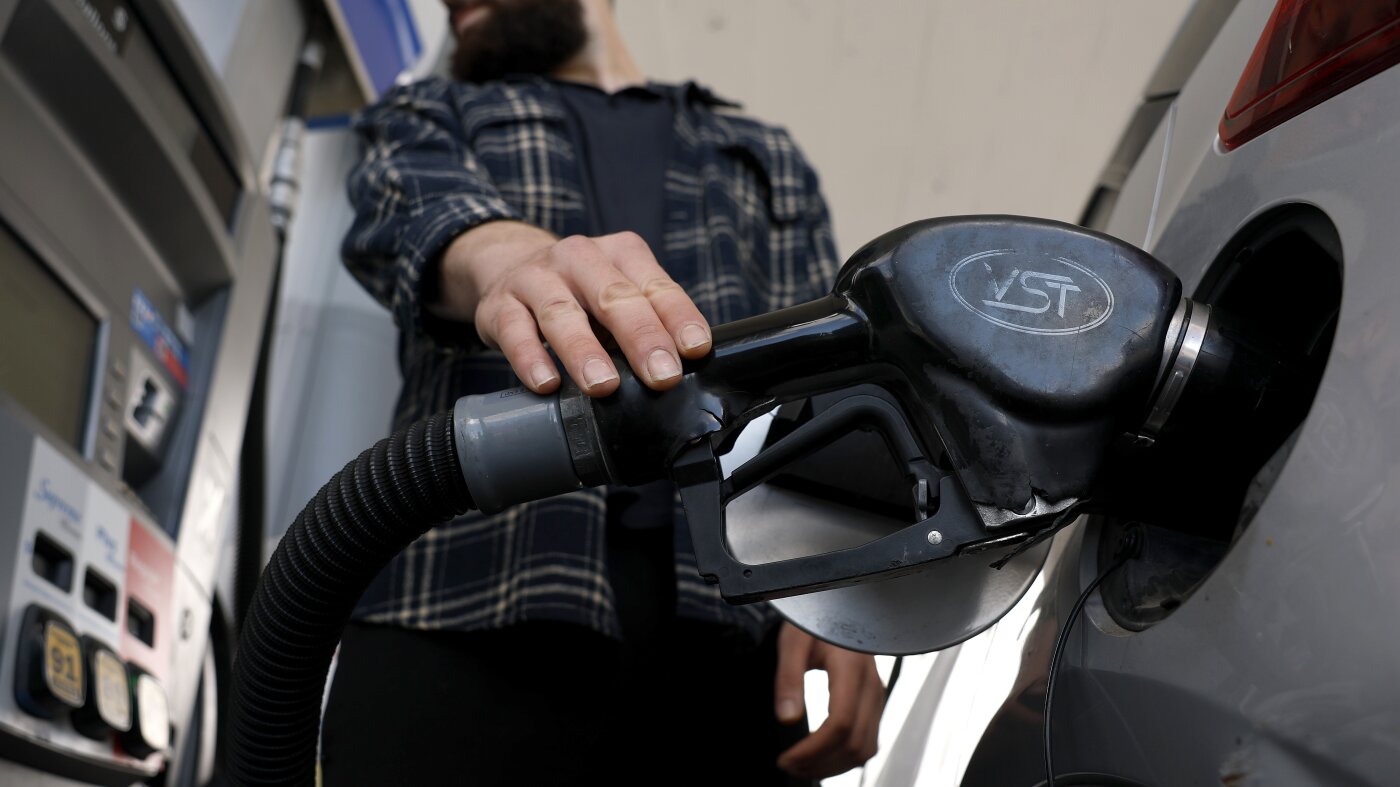
contextual insights The platform aggregates financial data and market news to provide clear insights into stock performance and earnings outcomes. The national average for a gallon of gasoline has reached $4.55 as America enters one of the busiest travel weekends of the year. Consumers seeking to cut costs are evaluating options ranging from driving slower to considering electric vehicles or reducing travel altogether.
Live News
contextual insights While data access has improved, interpretation remains crucial. Traders may observe similar metrics but draw different conclusions depending on their strategy, risk tolerance, and market experience. Developing analytical skills is as important as having access to data. Investors often monitor sector rotations to inform allocation decisions. Understanding which sectors are gaining or losing momentum helps optimize portfolios. As reported by NPR, the national average price for a gallon of gasoline stands at $4.55, a level that coincides with one of the busiest travel weekends in the United States. The report highlights several potential strategies for drivers to lower their fuel expenses. These include adjusting driving habits—such as reducing speed and avoiding rapid acceleration—maintaining proper tire pressure, and using cruise control on highways. Other suggestions involve shifting to electric vehicles, carpooling, using public transportation, or simply choosing not to drive when possible. The $4.55 figure reflects the latest available data on the national average, underscoring the financial pressure on households planning holiday travel. The options presented range from immediate behavioral changes to longer-term vehicle transitions, all aimed at reducing per-mile costs.
Gas Prices Hit $4.55 Per Gallon: Strategies for Consumers to Reduce Fuel Costs Ahead of Holiday Travel Access to futures, forex, and commodity data broadens perspective. Traders gain insight into potential influences on equities.Some investors prioritize clarity over quantity. While abundant data is useful, overwhelming dashboards may hinder quick decision-making.Gas Prices Hit $4.55 Per Gallon: Strategies for Consumers to Reduce Fuel Costs Ahead of Holiday Travel Market participants frequently adjust dashboards to suit evolving strategies. Flexibility in tools allows adaptation to changing conditions.Observing market sentiment can provide valuable clues beyond the raw numbers. Social media, news headlines, and forum discussions often reflect what the majority of investors are thinking. By analyzing these qualitative inputs alongside quantitative data, traders can better anticipate sudden moves or shifts in momentum.
Key Highlights
contextual insights Real-time alerts can help traders respond quickly to market events. This reduces the need for constant manual monitoring. Risk-adjusted performance metrics, such as Sharpe and Sortino ratios, are critical for evaluating strategy effectiveness. Professionals prioritize not just absolute returns, but consistency and downside protection in assessing portfolio performance. Key takeaways from this report revolve around the impact of elevated gasoline prices on consumer behavior and broader economic patterns. The $4.55 average may influence travel plans, with some families choosing shorter trips or alternative modes of transport. Historically, periods of high fuel costs have accelerated interest in fuel-efficient vehicles and electric vehicle adoption. Additionally, higher gasoline prices can ripple through the economy, potentially affecting discretionary spending in other categories such as dining out or entertainment. The timing—ahead of a major travel weekend—amplifies the relevance of cost-cutting strategies. While the report does not specify how long prices might remain at this level, market expectations suggest that crude oil supply dynamics and refinery capacity could keep prices elevated in the near term, though conditions may change based on global demand and policy decisions.
Gas Prices Hit $4.55 Per Gallon: Strategies for Consumers to Reduce Fuel Costs Ahead of Holiday Travel Historical patterns can be a powerful guide, but they are not infallible. Market conditions change over time due to policy shifts, technological advancements, and evolving investor behavior. Combining past data with real-time insights enables traders to adapt strategies without relying solely on outdated assumptions.Some traders prefer automated insights, while others rely on manual analysis. Both approaches have their advantages.Gas Prices Hit $4.55 Per Gallon: Strategies for Consumers to Reduce Fuel Costs Ahead of Holiday Travel Real-time analytics can improve intraday trading performance, allowing traders to identify breakout points, trend reversals, and momentum shifts. Using live feeds in combination with historical context ensures that decisions are both informed and timely.Combining technical analysis with market data provides a multi-dimensional view. Some traders use trend lines, moving averages, and volume alongside commodity and currency indicators to validate potential trade setups.
Expert Insights
contextual insights Investors increasingly view data as a supplement to intuition rather than a replacement. While analytics offer insights, experience and judgment often determine how that information is applied in real-world trading. Some traders use futures data to anticipate movements in related markets. This approach helps them stay ahead of broader trends. Investment implications from the current gasoline price environment warrant cautious consideration. Higher fuel costs may benefit oil and natural gas producers, as their revenues could increase with sustained prices. Conversely, sectors such as airlines, logistics, and consumer discretionary—especially travel and tourism—could face margin pressure if demand softens due to higher transportation expenses. Electric vehicle manufacturers and providers of energy-efficient technologies might see increased consumer interest, potentially supporting their market positions. However, any investment decisions should be based on a range of factors, including long-term trends, regulatory changes, and company-specific fundamentals. No fixed price targets or timing predictions can be justified from this single data point. The $4.55 average serves as a reference for current conditions, but future movements in gasoline prices remain subject to global supply, geopolitical events, and macroeconomic shifts. Disclaimer: This analysis is for informational purposes only and does not constitute investment advice.
Gas Prices Hit $4.55 Per Gallon: Strategies for Consumers to Reduce Fuel Costs Ahead of Holiday Travel Real-time monitoring allows investors to identify anomalies quickly. Unusual price movements or volumes can indicate opportunities or risks before they become apparent.Access to reliable, continuous market data is becoming a standard among active investors. It allows them to respond promptly to sudden shifts, whether in stock prices, energy markets, or agricultural commodities. The combination of speed and context often distinguishes successful traders from the rest.Gas Prices Hit $4.55 Per Gallon: Strategies for Consumers to Reduce Fuel Costs Ahead of Holiday Travel Real-time updates reduce reaction times and help capitalize on short-term volatility. Traders can execute orders faster and more efficiently.Experienced traders often develop contingency plans for extreme scenarios. Preparing for sudden market shocks, liquidity crises, or rapid policy changes allows them to respond effectively without making impulsive decisions.